Lakefront Spring City Blossoming Landscape | Dian Zhong New Area Uses Festivals to Add Flavor of Rural Revitalization
PublishDate:2026-07-30 15:09Source: YUNNAN DIAN ZHONG NEW AREA
In midsummer, Kunming enjoys cool weather. At the foot of Laoye Mountain, at an altitude of 2,730 meters, a sweet celebration was held as scheduled. On July 26, the 5th Honey Fragrance Adi Honey Culture Festival kicked off, attracting thousands of visitors to Adi Village to savor the gifts of the high mountains.
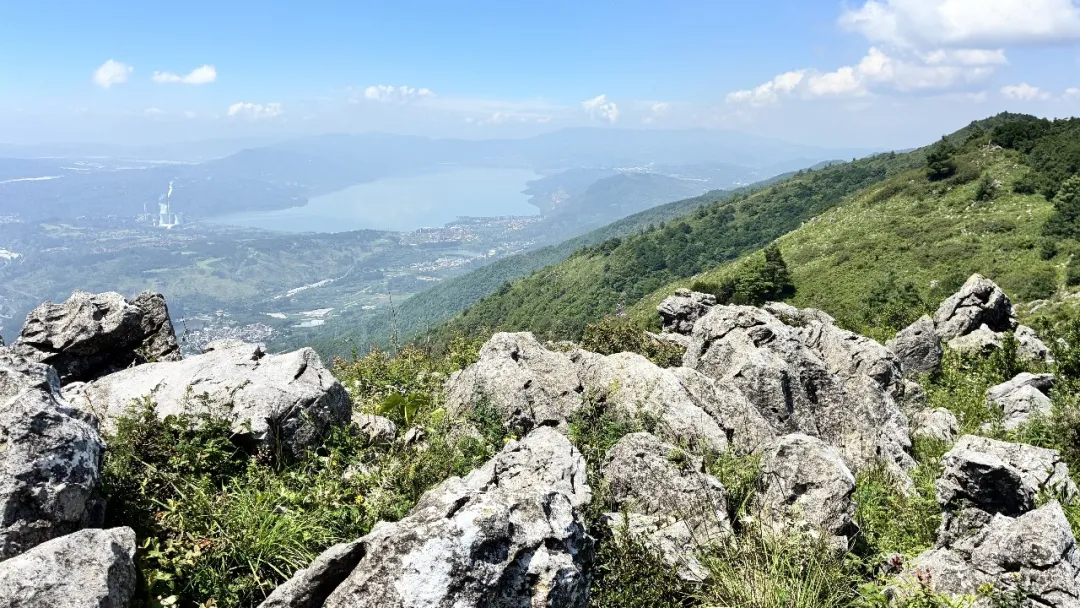
Scenic view of Laoye Mountain
“The theme of this year’s honey culture festival is ‘Lakefront Spring City · Honey Paints the Blossoming Landscape’,” said Fu Wenqiong, Secretary of the Party General Branch of the Adi Community. She introduced that in addition to free tastings of raw honeycomb and a fun honeycomb-eating contest, visitors can also take part in beehive painting and beeswax handicraft workshops. The cultural and creative market features bee products and ethnic handicrafts, and in the evening there was a Samei long-table banquet and a starry bonfire dance.
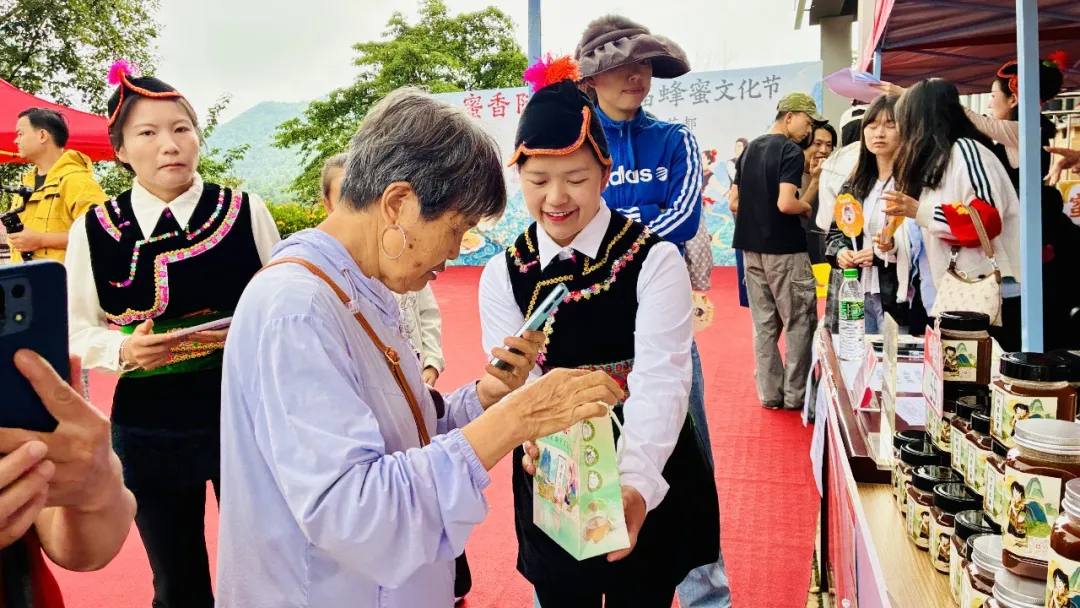
Auntie Li (left), attending the honey festival for the first time, chooses a small bottle of Adi multifloral honey
Laughter filled the air at the honeycomb-eating contest. Auntie Li, who came from downtown Kunming, was attending the festival for the first time. “I saw it on Douyin and came right away. The Adi villagers are very friendly, and the activities are quite rich.”
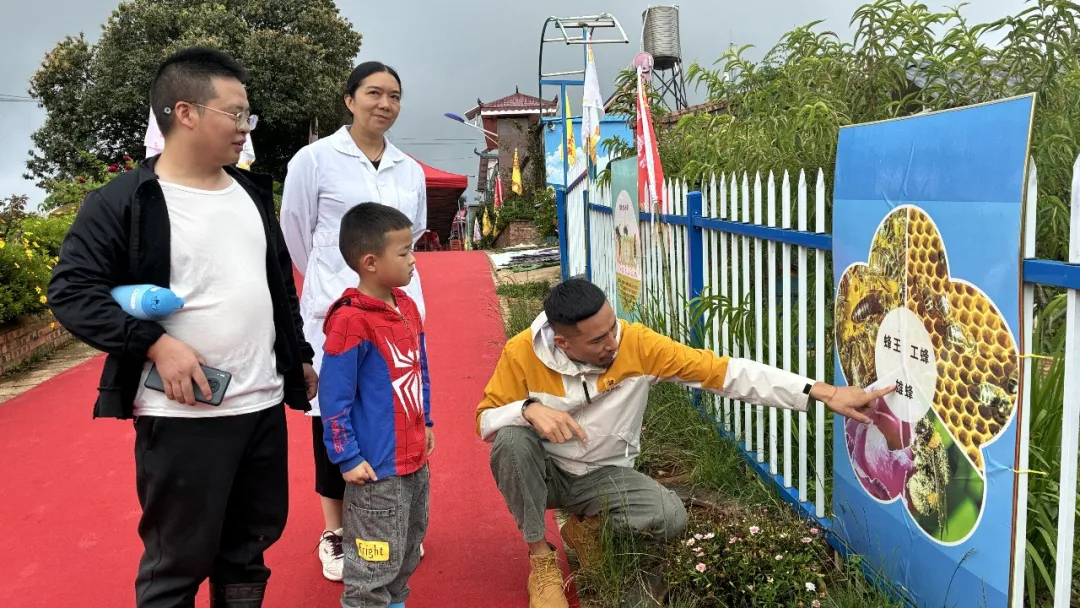
Pu Guangwei explains the division of labor among bees to a child
Dr. Jiang from the Dabanqiao Community Health Service Center brought his 6-year-old son to the event. The child lingered for a long time at the beekeeping area, curiously asking about the division of labor between the queen bee and worker bees. The beekeeper explained in detail: “Each hive houses a queen bee, which can lay 700 to 1,200 eggs a day. Worker bees are responsible for collecting nectar, cleaning, and caring for the young.” This nature lesson was far more vivid than anything in a textbook.
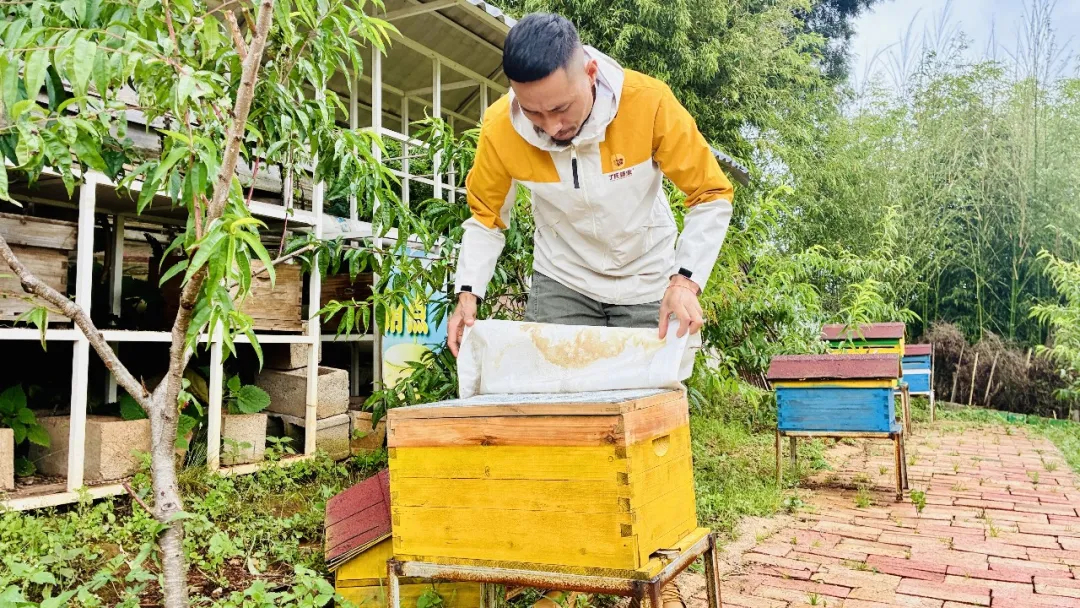
Pu Guangwei, a staff member of Yunnan Dingshi Bee Industry and Trade Co., Ltd., explains that the bees raised in the boxes are the Chinese honey bee (Apis cerana), unique to Yunnan
Pu Guangwei from Dingshi Bee Industry introduced that the bees are the Chinese honey bee (Apis cerana) unique to Yunnan, “adapted to the altitude and climate here, allowing for year-round stationary beekeeping.” Fixed-site beekeeping requires little investment and produces high quality, making it suitable for community residents who remain in their hometown. “The environment of Adi determines the superior quality of the products,” Pu Guangwei said as he opened a beehive. “This is multifloral honey. Dozens of mountain flowers bloom at the same time, making the honey more fragrant and giving it a more complex flavor.”
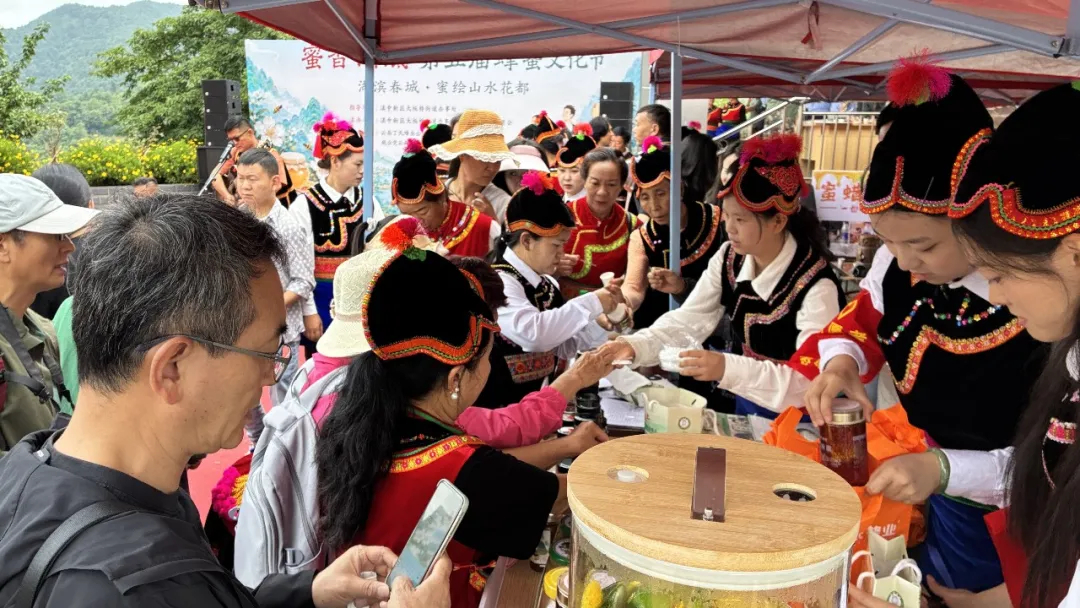
Numerous visitors taste and buy Adi's local honey
The Adi Community boasts a high-mountain ecological environment, and its distinct four-season, three-dimensional climate nurtures abundant nectar sources. Dingshi Bee Industry has deep cooperation with the Adi Qingyuan Breeding Professional Cooperative, bringing over 40 beekeeping households into industrialized operations and establishing a stable annual production and sales chain.
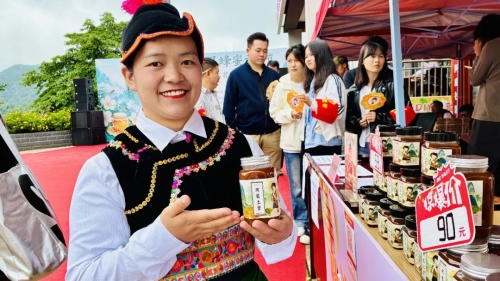
Adi's local honey
“For the past five years, we have upheld the principle that lucid waters and lush mountains are invaluable assets, turning the tiny honeybee into a sweet industry that increases villagers’ incomes,” said Fu Wenqiong. Adi has promoted standardized ecological beekeeping, relying on natural mountain flowers to produce additive-free local honey. “Beekeeping protects vegetation and promotes pollination, safeguarding the ecology on one hand and supporting villagers’ wallets on the other.”
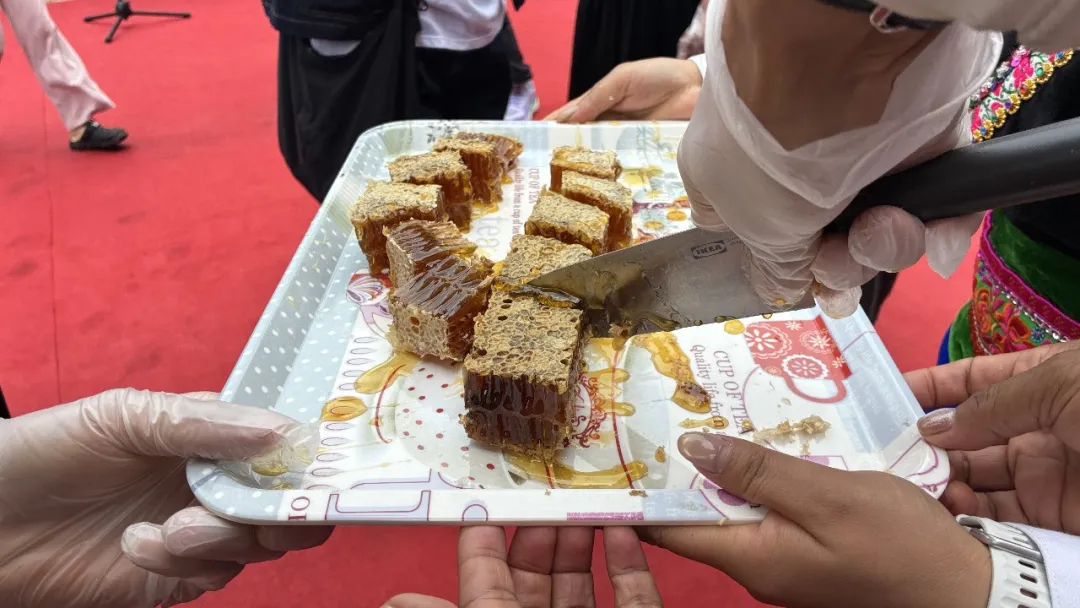
Pu Guangwei explained that January and June are the main honey harvest seasons on Laoye Mountain, “and winter honey can also be harvested in October and November.” The honey reaches markets beyond the mountains through online e-commerce and offline centralized purchasing, “and is sold to Guangdong, Shanghai, Beijing and other places for use in dining, baking, beverages, and pharmaceutical factories.”
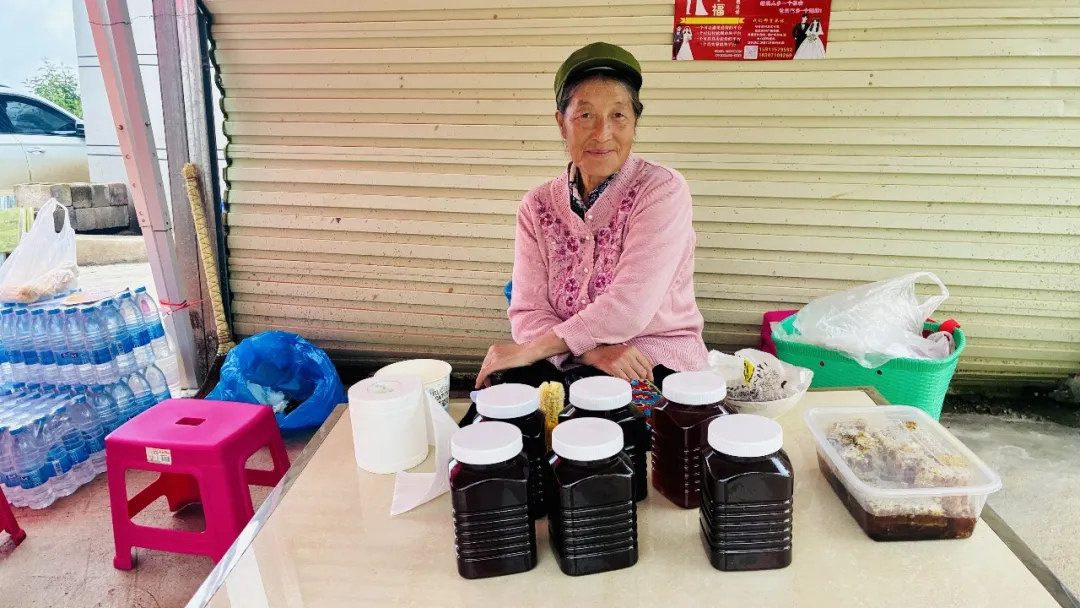
Auntie Xiaozhi, a resident of Adi, sets up a stall in front of her home to sell honey
蜂蜜节现场,65岁的小芝阿姨坐在自家门前,“亲戚朋友介绍来家里买,社区年轻人也帮我在朋友圈宣传。今年收了五六十斤百花蜜,今天人多,摆个小摊慢慢就卖掉了。”
At the festival site, 65-year-old Auntie Xiaozhi sat in front of her house. “Relatives and friends introduced buyers to my home, and young people from the community helped me promote it on WeChat Moments. I harvested fifty or sixty jin(kg) of multifloral honey this year. There are many people today, so I set up a small stall and it’s selling quickly.”
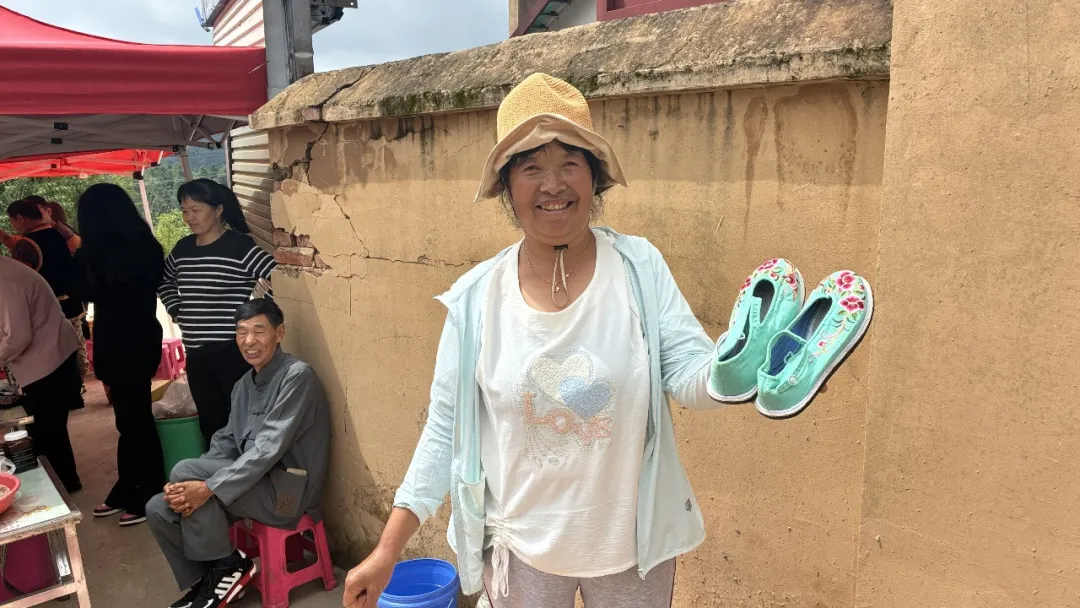
Adi resident Yu Lihong brings her hand-embroidered works to sell at the cultural and creative market
At a nearby stall, Samei embroiderer Yu Lihong displayed hand-stitched embroidered shoes. “These are all traditional Samei handicrafts. Flowers and phoenix birds are our favorite motifs.” A pair of handmade embroidered shoes sells for 200 yuan, while a finely crafted cockscomb hat sells for 300 yuan. Yu Lihong’s family also grows 3 mu of squash and 6 mu of broccoli, making a living from multiple sources.
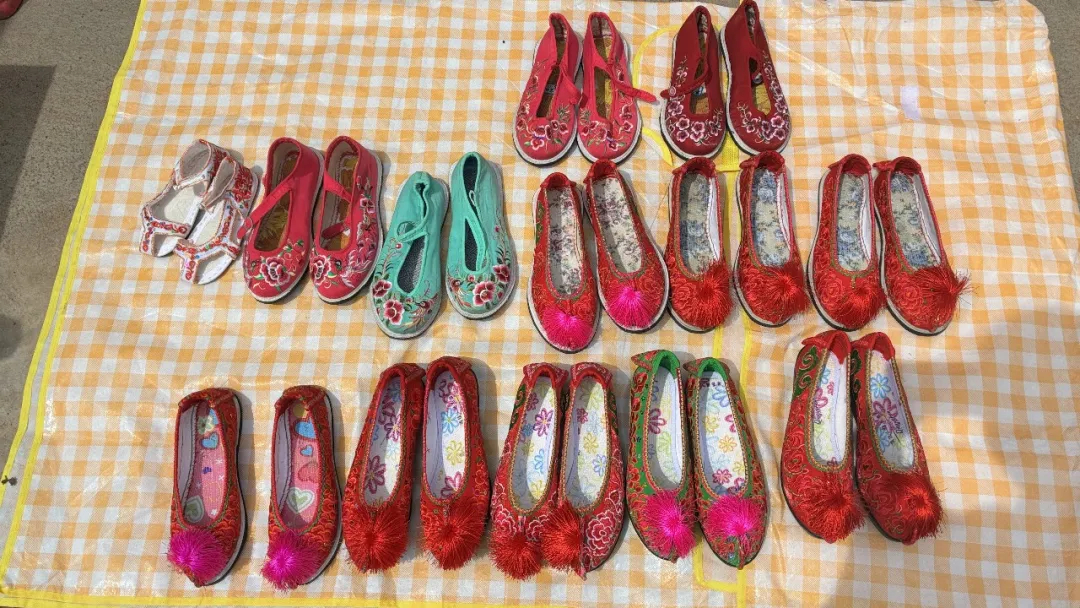
Samei embroidered shoes
A festival connects the small players along the industrial chain: tourists bring their children to explore the kingdom of bees, taste the Samei long-table banquet, and buy vegetables fresh from the soil and handmade embroideries. Through this, the community organizes scattered farmers and turns the festival into a “calling card” delivered to the city.
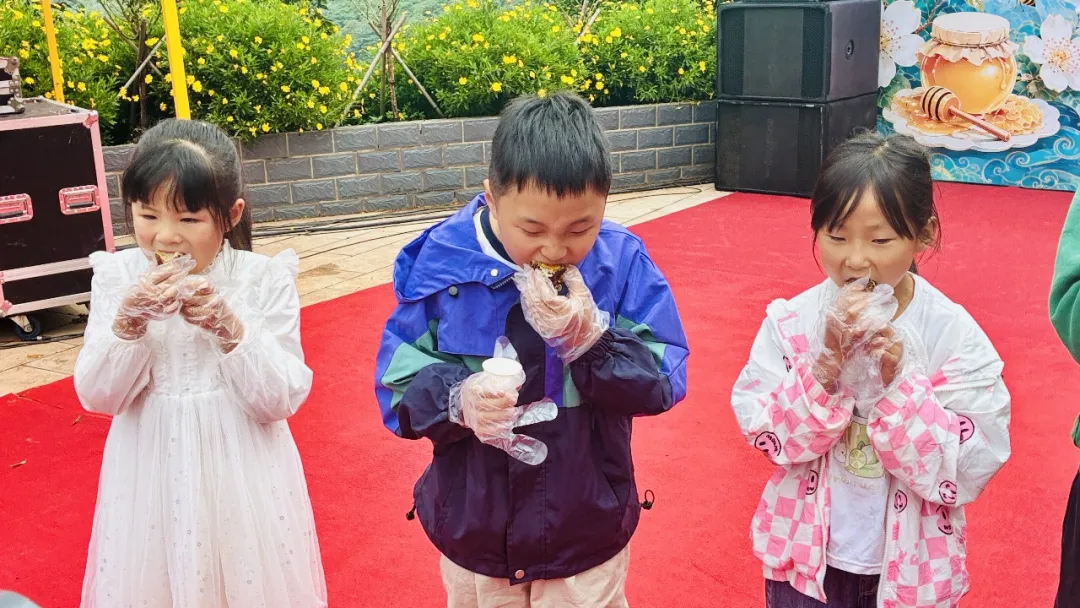
The fun honeycomb-eating contest is the most popular among visitors, with children enthusiastically tasting
“Holding a festival is not just about drawing crowds; it is also a practice of deepening the integration of agriculture, culture, and tourism,” Fu Wenqiong said. The Adi Community will continue to strengthen the sweet economy, delve into honey folklore and Samei culture, standardize beekeeping practices, upgrade the industrial chain, and create distinctive cultural tourism routes by combining study tours and rural “micro-vacations.”
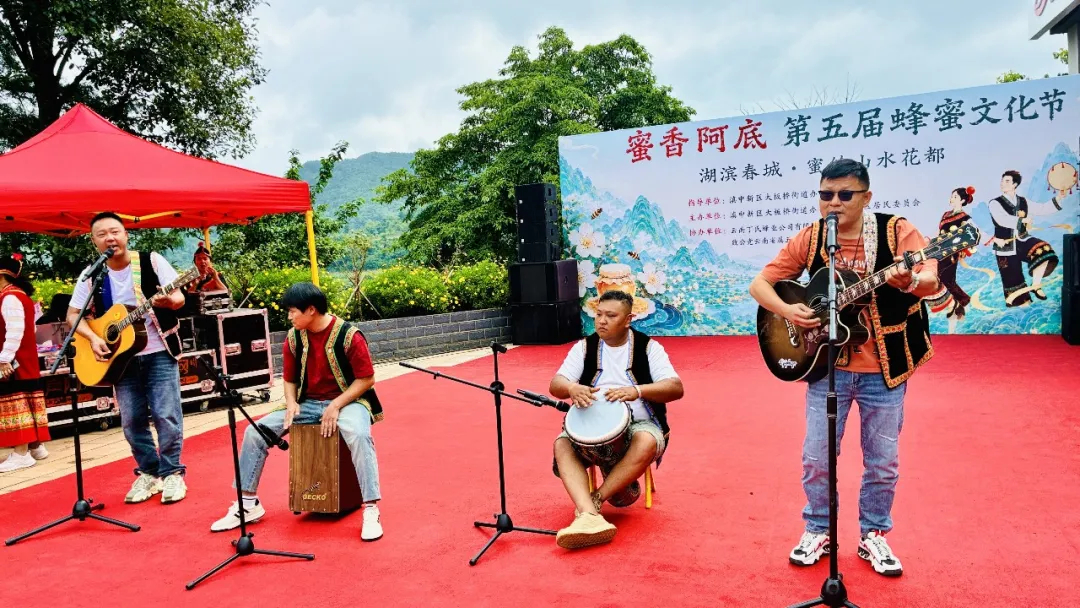
The New Area’s Samei Tiger Band also joins the honey festival
In recent years, Dian Zhong New Area has continuously used distinctive festivals to showcase its landscapes and culture, activating rural vitality. From “Cloud Joy Run,” where runners traverse the industrial park, to the Torch Festival igniting ethnic flames of passion, to the Grape Picking Festival captures the joy of harvests, the New Area has been tapping local resources to turn festivals into windows for showcasing its natural and cultural beauty, helping residents increase their incomes.
At the foot of Laoye Mountain, flowers bloom year after year, and the new life brewed from sweetness will get better and better.
Click here to view the Chinese report
(Editors: Jennifer, Evan)
-
During the 2026 summer travel rush, Kunming border inspection station inspected over 649,000 inbound and outbound passenger trips
2026.09.03 -
Through forests, over mountain ridges, and up to the summit — "Dian Zhong Trail Run: Conquering Laoye Mountain" ignites passion for the great outdoors
2026.08.25 -
People's Daily Features Yunnan Dian Zhong New Area: Building a Testing Ground for Deep Integration of Government, Industry, Academia, Research, and Application
2026.08.14 -
Lakefront Spring City Blossoming Landscape | This Summer, Come to Dian Zhong New Area to Enjoy Cool Comfort and Ease
2026.08.05 -
Lakefront Spring City Blossoming Landscape | Dian Zhong New Area Uses Festivals to Add Flavor of Rural Revitalization
2026.07.30 -
Dian Zhong New Area Airport Commercial District gathers momentum in attracting crowds
2026.07.13